
Before the Block
Before there was a Windsor Place, there was a farm. Before the farm, a forest. Before the forest, the Canarsee people of the Lenape nation, who had lived in the territory they called Lenapehoking for thousands of years before the Dutch arrived in the 1630s. The land that would become Windsor Terrace sat at the edge of what Dutch colonists organized as the Town of Flatbush, carved from Canarsee territory through a combination of purchase and force.
By the early 1800s, the Vanderbilt family held a substantial farm stretching across the southwestern slope below the ridge that would later become Prospect Park. The land was open and agricultural, gently rolling toward the lower ground near the Gowanus Creek. John Vanderbilt worked the property until the middle of the century, when the city's expansion into Brooklyn made continued farming untenable and development inevitable.
The neighborhood's geography would always carry traces of what came before. A low ridge running through the area fed natural springs on its western face. Those springs drained westward and northward toward the Gowanus watershed. They have never stopped running. They just run underground now, seeping into the combined sewer system beneath Prospect Park Southwest, two blocks from Windsor Place.
Birth of Windsor Place
In 1849, a developer named William Bell purchased John Vanderbilt's farmland and subdivided it into 47 building lots, founding what he called Windsor Terrace. The name was borrowed from Windsor, England -- aspirational geography for a neighborhood that would take decades to fill in. Bell platted streets, drew lot lines, and left the rest to time.
A footnote, unresolved: a 1911 reference book — A Synoptical History of the Towns of Kings County — credits the naming to Robert Bell, not William. Both names appear in the public record. The discrepancy may be a transcription error in one source or the other, or it may reflect a family business with two principals. Either way the deal stands; the founding date does not change.
“By resolution, May 21, 1888 — Braxton became Windsor, and Herkimer became Brevoort, on the same Council vote.”-- Brooklyn Eagle, Mon May 21, 1888, page 6
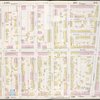
The block between 7th and 8th Avenues was originally called Braxton Street. On May 21, 1888, by formal Brooklyn Common Council resolution, Braxton Street was renamed Windsor Place -- and in the same vote, Herkimer Street was renamed Brevoort Place. Two utilitarian American street names swapped for two prestige names (Windsor for English royalty, Brevoort for the old Dutch-NYC patrician family) in a single Council action. The rename was reported the next day on page 6 of the Brooklyn Eagle and on page 1 of the Brooklyn Daily Times. Kevin Walsh of Forgotten NY had long confirmed the swap happened but never found the date; a May 2026 community contribution surfaced the 1888 article. The street that had been called Windsor Place -- a stretch of 16th Street between Prospect Park West and Prospect Park Southwest -- lost its name in the same era and became plain 16th Street.
The first row houses on the block rose in the 1880s and 1890s: attached brick construction, deep and narrow, built by small developers filling lots one or two at a time. The characteristic oriel windows -- some polygonal, some rounded -- were designed to let occupants see in three directions from a single room. The conical roof ornamentations that capped several buildings were pure Victorian vanity and still stand today. By the time the 20th century arrived, the block had its bones.
Primary Sources
- Brooklyn Eagle, May 21 1888 p.6 — the rename article (clipping)→
- Brooklyn Daily Times, May 21 1888 p.1 — same-day primary source (newspapers.com)→
- Brooklyn Daily Times, May 23 1888 p.2 — echo coverage (newspapers.com)→
- Sanborn Fire Insurance Map, 1888 (NYPL)→
- Forgotten NY: Windsor Place (2016)→
- 1885: Earliest Windsor Terrace marriage record (Brooklyn Eagle)→
- 1888: Lott & Jean Purvis married at Windsor Terrace — honeymoon Sag Harbor (Brooklyn Daily Times)→
The Golden Age
In the first decades of the 20th century, Windsor Terrace filled in fast. Developer William L. Calder built 700 houses in the neighborhood between 1902 and 1919 -- a building program so relentless that he is credited with inventing the two-family house as a Brooklyn type. His houses were practical, sturdy, and nearly identical, built for the working families who were arriving by the thousands.
Irish immigrants formed the backbone of the new neighborhood. They came from Kerry and Cork and Connemara, drawn by the affordable housing stock, the proximity to Prospect Park, and the community already established by earlier arrivals. They found work in construction, in the city's transit system, at the docks. They built churches, established mutual aid societies, and organized baseball leagues with teams sponsored by the bars on 8th Avenue and Prospect Park West.
The 1930 Brooklyn phone directory lists dozens of families on Windsor Place -- Irish surnames, a scattering of Italians and Poles, the census rolls of a neighborhood still settling into itself. Many of those families would stay for generations. Steve Finamore, who grew up above Bob's Hardware Store at the corner of Windsor Place and 9th Avenue from 1969 to 1993, documented the neighborhood's oral history in his blog Container Diaries. His research names the families who defined every stoop: the Horan family at the first house right off 8th Avenue (between 7th and 8th), the Cullen family at 175 Windsor, the Kent family at 110 Windsor, the Cole family near the subway. These weren't statistics. They were people who spent entire lives on a two-block stretch.
On Windsor Place between 7th and 8th Avenues, the Horan family owned the corner house at 8th Avenue across multiple generations. Their stoop became the kind of place you stayed until 3 in the morning. A bookstore called The Bookshelf, run by the Cregg family, sat on Windsor Place near 9th Avenue, stocking pulp fiction and neighborhood news in equal measure.
Prospect Park became the block's living room. Olmsted and Vaux had designed it in the 1860s as a democratic escape for all New Yorkers, its western edge -- Prospect Park West -- forming the physical border of Windsor Terrace. The park's Culver Viaduct and boathouse were community institutions. On summer evenings, the entire block migrated toward the park entrance at the end of the street.
Primary Sources
- 1930 Brooklyn Phone Directory (Archive.org)→
- Brownstoner: Windsor Terrace Name Origins→
- 1902: C. M. Weldner & Caroline Cox married at 27½ Windsor Place (Brooklyn Citizen)→
- 1912: Frances Merklin & Milton Cowles at 46A Windsor Place — white silk voile, lilies-of-the-valley (The Chat)→
- 1915: Two architects from Iowa married at 47 Windsor Place — honeymoon by Great Lakes (Times Union)→
- 1922: Frances Hulsaver & Rev. Stiehler at 278 Windsor Place — Thousand Islands honeymoon (Brooklyn Daily Times)→
- 1926: Doris Ellsworth Severe born at 245 Windsor Place (The Chat)→
Depression, War, and the Tax Photos
Farrell's Bar and Grill opened at 215 Prospect Park West in 1933, the year Prohibition ended. It was one pub in a neighborhood that had several, but it would outlast all of them. Farrell's became the living record of Windsor Terrace's Irish-American community -- a place where the same families drank through the Depression, through the war, through the decades that followed. It has been open, with minor interruptions, for more than ninety years.
In October 1933, the IND Culver Line opened its 15th Street-Prospect Park station in Windsor Terrace, making the neighborhood a genuine commuter suburb for Manhattan workers. The subway line was built by cut-and-cover excavation under Prospect Park West -- one block east of Windsor Place -- disrupting the groundwater and natural springs that had run beneath those streets since before the Dutch arrived.
“The 1939 tax photos captured every stoop on Windsor Place. The images are still there, waiting to be found.”-- NYC Municipal Archives
Between 1939 and 1941, the city's Works Progress Administration dispatched photographers to document every building facade in New York. All 278,371 of them. The tax photos they produced are the single best record of how Windsor Place looked at its mid-century peak -- every stoop, every awning, every storefront, every detail of the houses that still stand today. The images are preserved by the NYC Municipal Archives and accessible at 1940s.nyc, where you can navigate a map and find the block exactly as it was.
Men from Windsor Place went to the war. The 1940 census records a family on the block -- the father a cook at a retail grocery, the son Dominick a high school graduate. Dominick served. His name is among those memorialized at Green-Wood Cemetery, three blocks from the house he grew up in.
Primary Sources
- 1940s Tax Photos Interactive Map→
- NYC Municipal Archives Photo Portal→
- Green-Wood WWII Memorial Project→
- 1931: Mary Louise Plumridge born at 55 Windsor Place (Times Union)→
- 1936: Concert pianist Elizabeth Franklin married at Church of the Holy Apostles, Windsor Terrace (Times Union)→
- 1939: Susan Fechner married at St. Mark's Lutheran, Windsor Terrace — honeymoon Puerto Rico & Cuba (Brooklyn Eagle)→
- 1941: Maureen Ellen Cochrane born at 220 Windsor Place (Brooklyn Eagle)→
- 1944: Kathleen Horan married at Windsor Terrace — brother PFC Martin J. Horan in the party (Brooklyn Citizen)→
- 1946: Dorothy Dowd & Frederick von Rodeck at Windsor Terrace — groom returned from Guam (Brooklyn Citizen)→
The Crash
At 10:33 in the morning on a grey December day, a United Airlines DC-8 fell out of the sky eight blocks north of Windsor Place.
Flight 826 had departed Chicago O'Hare bound for Idlewild Airport. Over Staten Island, it collided with a TWA Constellation in the clouds -- United had flown beyond its ATC clearance limit and into restricted airspace. The Constellation fell on Miller Field. The DC-8, traveling at 360 miles per hour, fell on Park Slope.
“New York looked like a picture out of a fairy book.”-- Stephen Baltz, age 11, December 16, 1960
The fuselage struck the Pillar of Fire Church at Sterling Place and 7th Avenue, exactly eight blocks up the corridor from Windsor Place. A 25-foot section of the right wing had already sliced through the brownstone at 126 Sterling Place, deflecting the plane into the church across the street. The plane narrowly missed a Catholic school with roughly 1,000 children inside. 134 people died: 84 aboard United 826, 44 aboard the TWA flight, and 6 on the ground. Among the dead on the ground: Wallace Lewis, 90-year-old caretaker of the Pillar of Fire Church, and two men who had been selling Christmas trees on the street.
One person survived the plane. Stephen Lambert Baltz, 11 years old, from Wilmette, Illinois, was thrown clear of the wreckage into a snowbank, which extinguished his burning clothing. He was conscious. He told the nurses at Methodist Hospital that New York had looked, from the air, like a picture out of a fairy book. He died the following day from pneumonia and jet fuel fume inhalation. He had been traveling alone to spend Christmas with his family in Yonkers. His parents donated the coins from his pocket to the hospital's poor box. They were bronzed and mounted on a plaque in the hospital's Phillips Chapel, where they remain.
The scar is still visible. At 126 Sterling Place, the brickwork changes color where the wing struck the roof and the building was repaired. A black cornice that was there before the crash is gone. Windsor Place was eight blocks away that morning. But you don't forget a plane in your sky.
The Expressway Years
Robert Moses drove the Prospect Expressway through Windsor Terrace between 1953 and 1960, bisecting the neighborhood along a corridor that had been residential streets. The arterial road cut the community into two halves and brought the noise and exhaust of through traffic to blocks that had been quiet. A proposed extension -- a full six-lane expressway running down Ocean Parkway all the way to the Belt -- was eventually fought off by neighborhood resistance. Windsor Terrace had been cut, but not destroyed.
The 1960s and 1970s brought the same forces to Brooklyn that hollowed out neighborhoods across urban America: white flight, municipal disinvestment, rising crime, abandonment. Windsor Terrace held on with unusual stubbornness. The Irish-American families who had arrived in the early 20th century did not leave. Houses were maintained. The block between 7th and 8th Avenues did not become a landscape of boarded windows.
Property turned over less here than almost anywhere else in the borough. The same surnames appeared decade after decade in death notices and deed transfers. Farrell's was still open. The park was still there. The block was still the block.
Primary Sources
- Brick Underground: Park Slope vs. Windsor Terrace→
- 1949: Elesha Clarke Driscoll born at 284 Windsor Place (Brooklyn Eagle)→
- 1952: Charles Gabbert Jr. born at 42-A Windsor Place — grandmother Catherine Vackner present (Brooklyn Eagle)→
- Oct. 29, 1952: Two babies born at 98 Windsor Place on the same day (Brooklyn Eagle)→
- 1953: Diana Marie McGeeney born at Windsor Place — father stationed at Camp Lejeune (Brooklyn Eagle)→
The Factory Years
One block from Windsor Place, between 12th and 13th Streets and 7th and 8th Avenues, the Ansonia Clock Company had occupied a massive industrial building since 1879. The company had been founded in Derby, Connecticut in 1851; when it moved to Brooklyn, its original factory burned immediately and was rebuilt. For fifty years it produced clocks for railroad stations, public buildings, and institutions across America. Production ended around 1930. The machinery was sold to a Soviet manufacturer. The building stayed.
By the 1970s, the Ansonia's vacant loft spaces had become what journalist Denis Hamill described as a bohemian refuge: artists, musicians, and photographers renting enormous floors for almost nothing in a neighborhood where Manhattan transplants had not yet arrived. The building went by The Factory -- a name borrowed from Warhol but the spirit entirely its own. It was full of people making things in a city that was otherwise falling apart.
“Artists rented enormous loft spaces for almost nothing in a neighborhood where Manhattan transplants had not yet arrived.”
Windsor Terrace in the 1980s and early 1990s remained one of the last genuinely affordable pockets of inner Brooklyn. The park was clean again. The subway worked. The neighborhood had not changed much in forty years, which was either a problem or the whole point, depending on who you asked.
A candy store on Windsor Place was where a teenage Isaac Asimov came to read science fiction magazines. His family ran candy stores across Brooklyn in the 1930s and 1940s -- the stores served as informal lending libraries for pulp magazines, and Asimov later credited this access with shaping his career as one of the 20th century's most prolific science fiction writers. The specific Windsor Place store is part of neighborhood oral history. The timing fits: Asimov grew up in Brooklyn from age 3, went to Boys High School in Bed-Stuy, and was already writing stories by his mid-teens.
Pete Hamill, the journalist and novelist who became one of Brooklyn's great chroniclers, grew up nearby in Park Slope. His memoir 'A Drinking Life' and his journalism document the particular Irish-American working-class Brooklyn that Windsor Terrace exemplified -- Farrell's Bar, the Prospect Park fence, the sense of a neighborhood that had figured something out. When Hamill wrote about Brooklyn, he was writing about places within walking distance of Windsor Place.
By the 2000s, the Ansonia had been converted to condominiums called Ansonia Court. Two-bedroom units were selling for $800,000. Debi Mazar and her chef husband Gabriele Corcos opened The Tuscan Gun at 199 Windsor Place -- their Italian restaurant featured in their Cooking Channel series Extra Virgin, and food press arrived. The Factory was a memory. The block was the same block. The prices were different.
The New Brooklyn
Since the pandemic, housing prices in Windsor Terrace have risen more than 30%. Family-sized units are scarcer than they have been in a century. The neighborhood that spent most of its existence being too quiet for investment has become exactly the kind of place that attracts it.
In 2024, a City Limits opinion piece titled 'Building a Windsor Terrace Our Children Can Afford' documented what longtime residents already knew: the multi-generational chain that had held the neighborhood together for 100 years was breaking. Grandparents were selling. Their children could not afford to stay nearby. The essay was written by someone who lived a few blocks from her husband's childhood home, whose children had the rare gift of grandparents in walking distance -- and who understood that this was becoming impossible to replicate.
“The block between 7th and 8th Avenues still has families who have owned their houses since the 1940s. Houses that have never been listed.”
In 2023, the longtime owner-bartender of Farrell's Bar and Grill died. Brooklyn Magazine published an obituary under the headline 'A Death in the Windsor Terrace Family.' Farrell's is still open, but another piece of what held the neighborhood together is gone.
The block between 7th and 8th Avenues still has families who have owned their houses since the 1940s. Two longtime residents on the even-numbered side passed away in the last year. The turnover is happening in real time, slowly, the way it always has -- not all at once, but one house at a time.
The people who define the block today are versions of every wave that came before. A couple at the heart of the block -- he grew up across the street, she around the corner, they married and never left -- are the soul of it: always hosting, always warm, Brooklyn through and through. He spent twenty years as a Rikers Island security guard; his brother spent twenty years in the public schools. Down the block, a longtime homeowner functions as something like the unofficial mayor, the connector. Two doors apart, two houses hold a generational thread: a current resident lives in his mother's former house, and his mother was best friends with the longtime owner next door -- a friendship made visible in a single address.
The Puerto Rican families who moved into the broader Park Slope area in the mid-20th century added to the texture. The art teachers and artists who arrived in the 1970s and 1980s -- a couple at one of the addresses, both former teachers -- added another layer. Each wave left its imprint without erasing the last. That is the trick the block has always managed.
For now.
Below Windsor Place
Windsor Place sits at the foot of the slope that runs down from Prospect Park, and beneath the street, the city is stranger than the map suggests.
Olmsted and Vaux built Prospect Park's waterway system entirely from scratch -- the Falkill, the Ambergill, the Lullwater, all engineered from flat Flatbush farmland with no natural streams to follow. But the springs that fed the original landscape never stopped. Live springs at the park's western edge are currently seeping into the combined sewer beneath Prospect Park Southwest, the street that runs along Windsor Terrace's park-facing edge. The water flows where it always flowed. The pipes are just in the way now.
“Beneath nearby Park Slope, Vechte's Brook is audible at sewer grates on quiet mornings.”
Beneath nearby Park Slope, Vechte's Brook -- a tributary of the Gowanus Creek, buried under asphalt since the 19th century -- is audible at sewer grates on quiet mornings. The Gowanus watershed claims all of it eventually. Windsor Place is near the top of that drainage system, which is either reassuring or not.
One block east of Windsor Place, the IND Culver Line (the F and G trains) runs in a cut-and-cover tunnel beneath Prospect Park West. It opened in October 1933. The excavation that created it disrupted whatever remained of the original groundwater pattern from before the park's construction. The tunnel is shallow -- fifteen to twenty-five feet below street level -- and runs parallel to the block's eastern end.
In 2025, the city announced a $68 million Bluebelt project targeting Windsor Terrace specifically as a chronic flash flooding zone. The park cannot drain fast enough. During heavy storms, water runs off the slope and into the streets faster than the combined sewer system can accept it. Basement floor drains back up. The springs run. Construction begins in 2029.
The underground is not metaphor. The block has always been wetter than it looks.
Do you know this block?
We're looking for a home on Windsor Place. If you know of anything coming available -- a sale, a rental, a family thinking of their next chapter -- we'd love to hear from you.
Tell us about a home →